
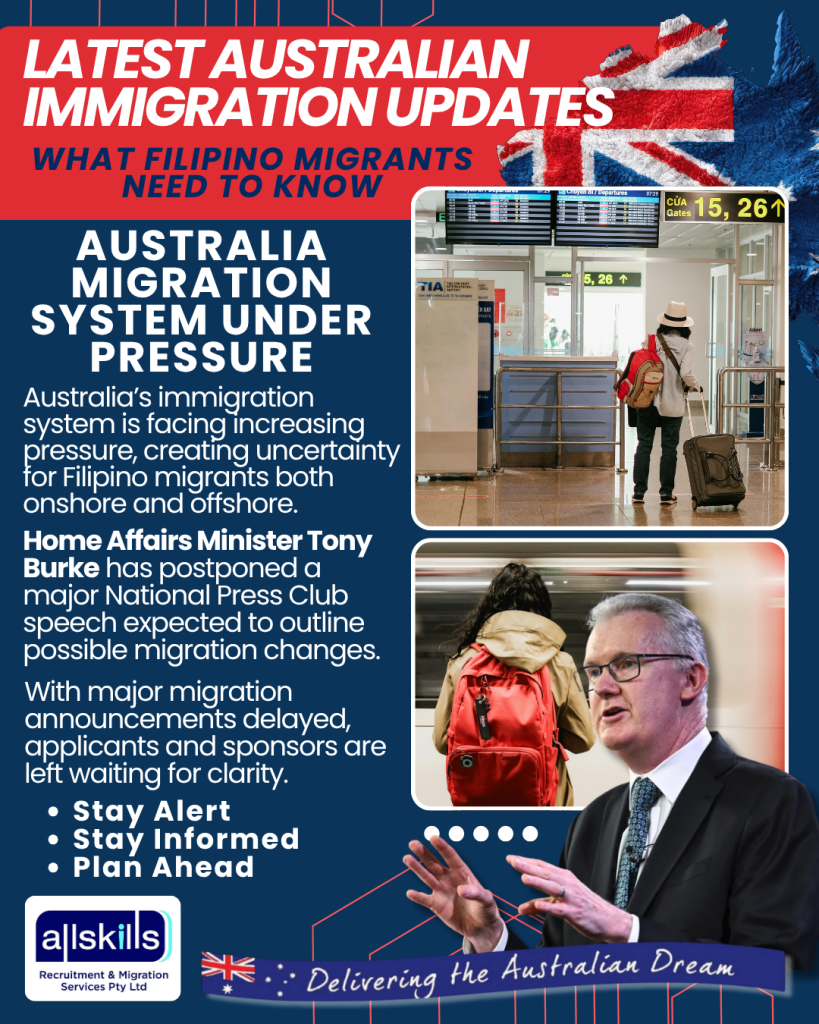
Australia’s immigration system is under pressure, and the latest figures show growing delays that will affect Filipino migrants—both those already in Australia and those still planning to move.
Home Affairs Minister Tony Burke recently postponed a major National Press Club speech expected to announce migration changes. Reports suggested possible cuts to backpacker visas, tighter asylum appeal rights, and stricter family reunion rules. The last-minute cancellation, linked to cabinet disagreements, has left many applicants and sponsors waiting for clarity.
Visa application backlogs (as of end of May 2026):
- Employer Nomination Scheme (subclass 186): Nearly 88,000 applications waiting (likely close to 100,000 by the end of the financial year)
- Skills in Demand (subclass 482): Almost 57,000 applications pending
- Regional Sponsored (subclass 494): Under 4,000 applications
- Skilled Independent (subclass 189): Around 15,000 applications
- State-Nominated (subclass 190): Around 22,000 applications
- Regional Provisional (subclass 491): Nearly 20,000 applications waiting against a much smaller allocation
Family visas face even greater strain. Onshore partner visas (820) had around 75,000–80,000 applications, with offshore partner numbers adding tens of thousands more. Contributing parent visas exceeded 100,000 applicants against only about 7,000 places for the entire parent program. Processing times for many skilled visas are stretching toward two years or more; partner visas risk heading toward three years, and parent visas could approach 20 years.
The Administrative Review Tribunal is also struggling. It is receiving far more cases than it can finalise and is falling further behind. Successful reviews return to the Department with high priority, adding more pressure on already long queues.
What this means for Filipinos
Many Filipinos rely on employer-sponsored pathways (482 then 186), regional visas (491/494), and skilled independent or state-nominated options. Longer processing times mean extended periods on temporary visas and delayed permanent residency. Those already working in Australia may gain some advantage under priority settings that favour onshore applicants in certain occupations, but overall capacity remains tight.
Family reunion is particularly difficult. Partner and parent applications face multi-year waits, making it harder for Australian citizens and permanent residents of Filipino background to bring spouses or ageing parents.
For Filipinos still overseas, competition is high and offshore applicants often face longer delays. Onshore applicants should prepare for extended bridging periods and keep documentation and compliance up to date.
The system is not closed, but it is slower. Filipinos planning a move or already on a pathway should monitor official updates, seek accurate advice early, and build realistic timelines. Patience and strong preparation will matter more than ever.
